Every fall, those PFOs hit the inbox with the force and speed of a t-shirt shot out of a canon at the Prudential Center. “We had a record number of applicants…” or “We had roughly 1,750 sopranos apply and your ass was NOT good enough.” If applying and auditioning is purely a numbers game, the numbers are not looking great.
All the advice you learned in school was half good, and half stuck in that golden age of opera as entertainment, when it seems to every singer under 45 that companies would give you a fat contract for just kind of being in the right place at the right time and not biting anyone in rehearsal (although famously you could do that too and they’d still let you do whatever if you got enough butts in seats).
It’s not enough to be perfect & radiant & stellar anymore
Now all the advice is about needing a brand. A vibe. A million followers on Instagram and another half mil on TikTok. A complete mastery of The Algorithm on top of the perfect aria package and the best audition wear and the right coaches and contacts and institutional support from a choice little unknown conservatory like Julliard or Curtis. And a resume that never quits and a friend who’s an agent and also roughly 184 ready to go Canva posts for when you win a $200 encouragement award. And also an absurd amount of luck.
Gag me.
And all of it is good advice. It really is! Time consuming, expensive advice. It just also sucks so think about because its the last thing want to think about when you’re working on “Batti, batti” for the 8th time since undergrad because some little local E- house is doing Giovanni. And now you maybe even have to get online? And make a whole ass website? Mamma mia!
Do opera singer websites even matter?
But not all hope is lost. You might not even need a website. For some singers, its enough to have an Insta and a really persuasive teacher and a tight resume. So let’s talk about why you might not want a website at all:
- You’re super early in your career (like undergrad early) and your current goal is just to get a lot better.
- You’re a super hot bass baritone who’s really good and low-key doesn’t have to scrap in the pits like the rest of us chickens
- You have too much singing to do and you’re SICK of getting hired (Good for you!)
- You feel 100% perfect about the videos of you on YouTube and don’t have any extremely weird stragglers from like 2012 where you were a different fach and also 60 lbs lighter and maybe also a different gender (cannot relate).
- NASA is calling and you’re about to drop out of the industry to become an astronaut.
But why might you want a website? You of course don’t need a website. You don’t need anything to be a singer except oxygen in your lungs and a song in your heart. But I hope for the sake of your audition panels that you have a little bit more than that ready to go. Why could a website actually be helpful? Here’s some reasons:
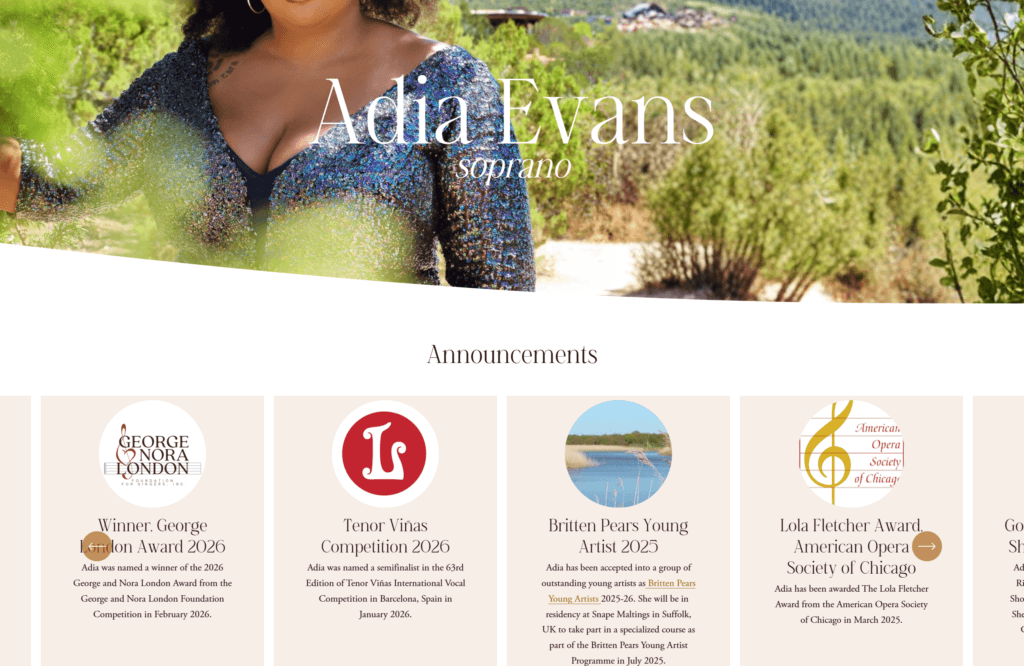
You’re tired of algorithms telling people who you are.
Aside from word-of-mouth, every other method of discovery relies heavily on algorithms, strict formatting, and the luck of the draw to get the right materials in front of the right people. Sending people your Instagram is cute and can give them a little taste of what you’re capable of, but its not the same as having full creative control and the ability to cull and boost what you want them to see. Never mind the constant ads and recommendations. You’ll still be fighting with the search engine and AI algorithms to help people find you, but you won’t be wasting time hoping people get what they need out of your social feeds and don’t get too distracted by an even shinier tenor that gets recommended to them half way through your feed.
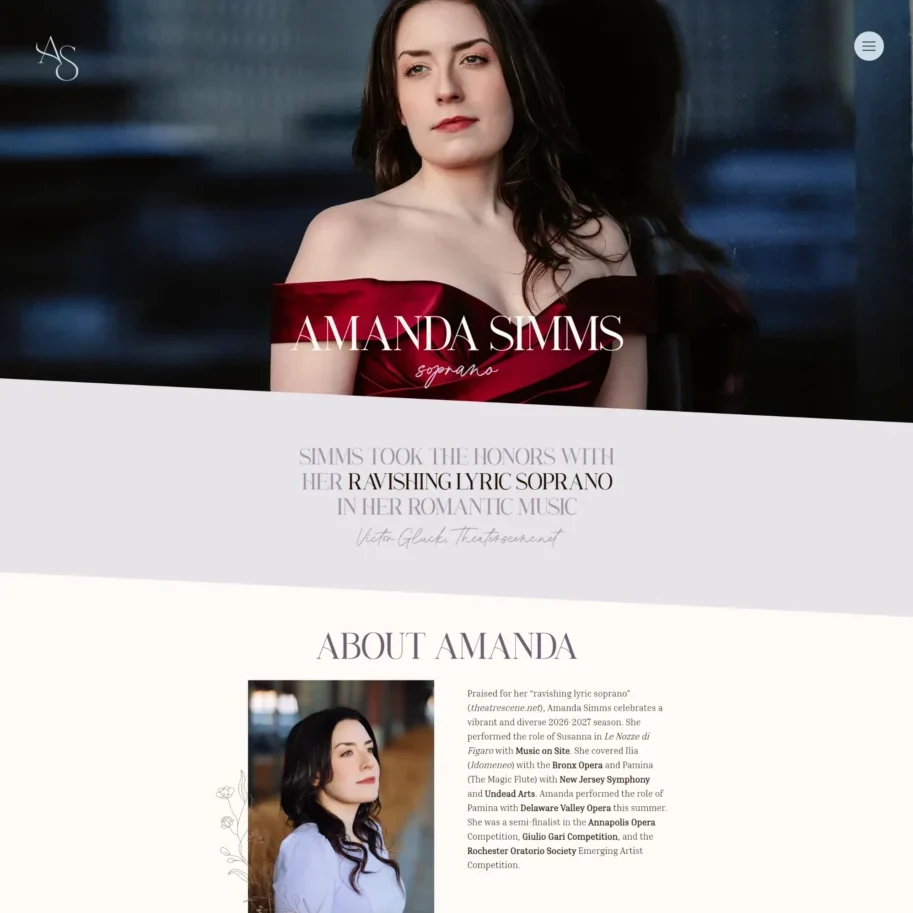
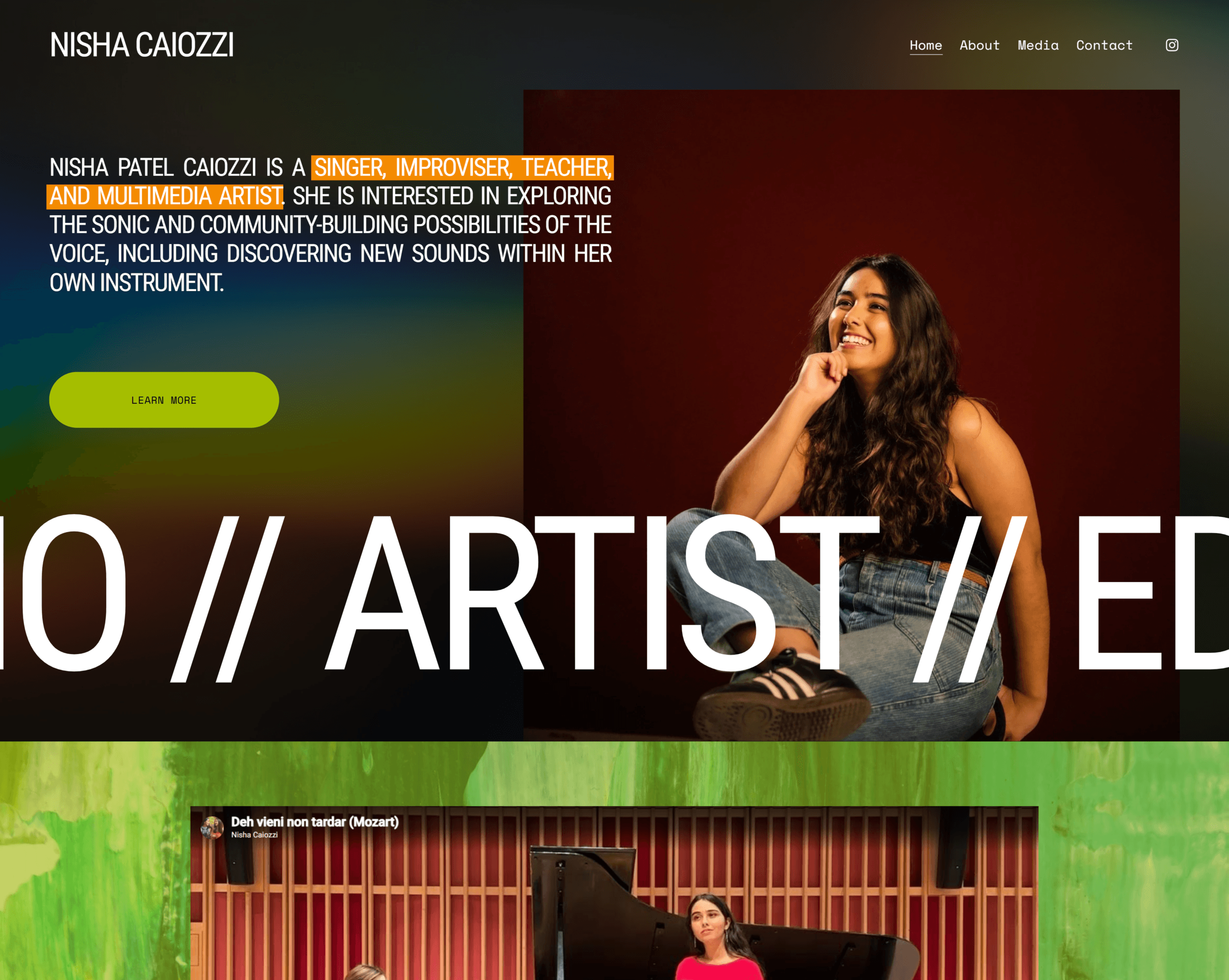
A website is the one place to show people exactly what you want them to see, in the order you choose, in the style you prefer. Create a fun little animation to draw attention to your upcoming gigs. Link to your recent performances. Shout out your teacher. Make a carousel for all your news in a banger season to show everyone just how much of a banger it really is. The web’s your oyster.
You have a lot to share.
A website can just be a glorified business card with your bio and headshot and a couple clips. But for some singers, that’s not enough to show the full picture. Maybe you have a correlating career that you want people to know about like directing or teaching. Maybe you sell templates and organizers to help other singers learn new roles. Maybe you have a lot to say about the work you do, and are tired of the typical industry standard of letting other creatives value their artistic takes above yours in the rehearsal room. You have a unique perspective and energy and you want other people to see it. Social media is great but its limited.
How many times have you prepared your bio for the back of a program and have been told “75 words or less.” You cobble together some kind of bio somewhat relevant to the specific performance but does it actually show what you can do? Seventy-five words to encapsulate over a decade of blood, sweat, and tears?
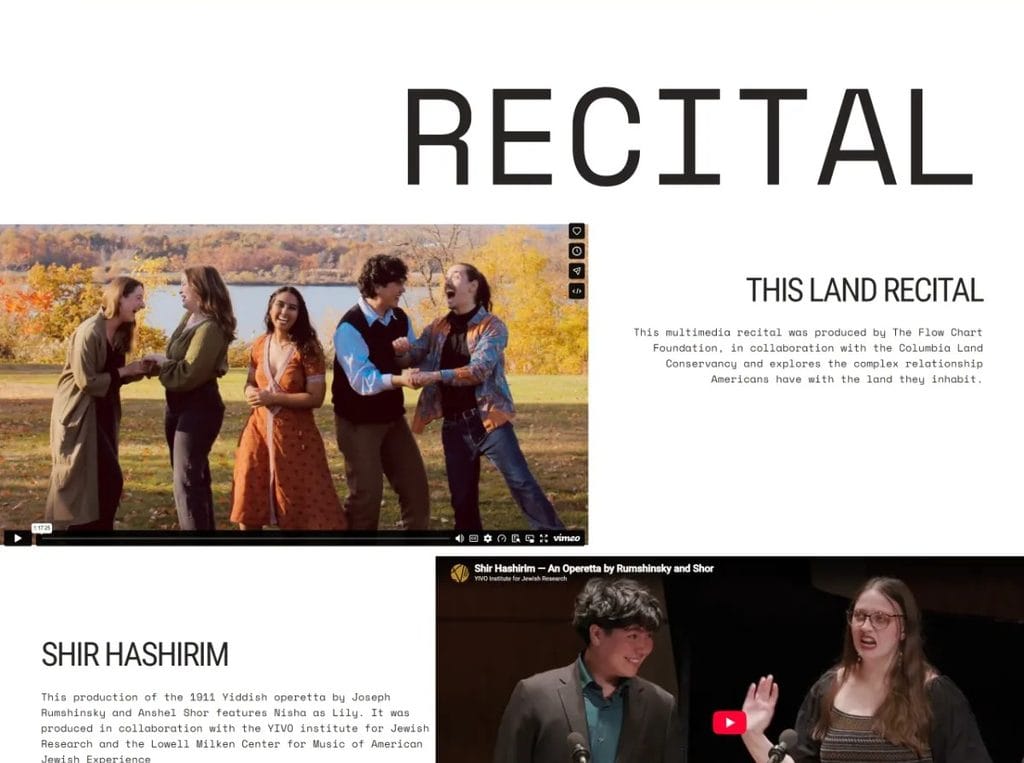
On a website, there’s almost no limits. Tell the people your whole story. Post all your best clips at a decent resolution without Instagram breathing down your neck about portrait vs landscape. Got really good audio clips but no good video clips at all? Put ’em up! Need to cater to both English language and German speakers ahead of your big European audition tour? A website can be that international introduction for you.
You want your work verified.
Having a website helps legitimize your work and give people a robust portfolio to fully understand the type of work you do. When someone is looking for a tenor in Atlanta who specializes in Wagner, you want your name in the pool. Aside from the literal proof of work in your portfolio through your audio and video clips, you can show off your experience and verify that the work you do is high quality and you’re worth hiring.
You can highlight a few choice quotes from reviews that show off how incredible your acting is, or put your full cv on display instead of your carefully culled, 9-point font resume. Or point people to your upcoming performances and help the powers that be see that you’re still actively performing, even when the big mainstage gigs take a dip. Show off your performance pictures and emphasize your work at the companies you want to keep coming back to. A website can be a powerful tool to verify your skills, prove your expertise, and build longer-term relationships.
It makes you the authority on you
In this world of AI overviews and quick responses from Alexa, it can be really hard to make yourself known. When someone asks these devices who you are, what sources does it pull from? A biography on a local choir’s homepage that you didn’t even write yourself 8 years ago? Your high school role as Sergeant Sarah in Guys and Dolls in the town newspaper? A paper you wrote for grad school that you couldn’t explain under gunpoint? These answer engines have to pull from something. And if you’re not having an Agnes Baltsa-in-the-80’s level career, chances are, they’re not pulling from your carefully crafted Wikipedia page. Instead of letting them pull from whatever might be out there, give them a primary source to look through.

But let’s not do everything to appease the robots. Having a website also means getting to have a little more control on how people see you. If you want to do more early music, you can highlight that. If you mostly want to work with new composers, you can show them what your work looks like and specifically target that type of work in the future.
Don’t freak out. You can make a website that makes sense.
This is just the beginning of a new series of blog posts called the DIY Diva. I’m going to be covering hosting platforms, domains, design tips, tech troubleshooting, brand development, SEO, social posts, and a whole lot more. In the meantime, if you have any questions, comments, concerns, queries, or need a little help with your own DIY work, hit me up here.